
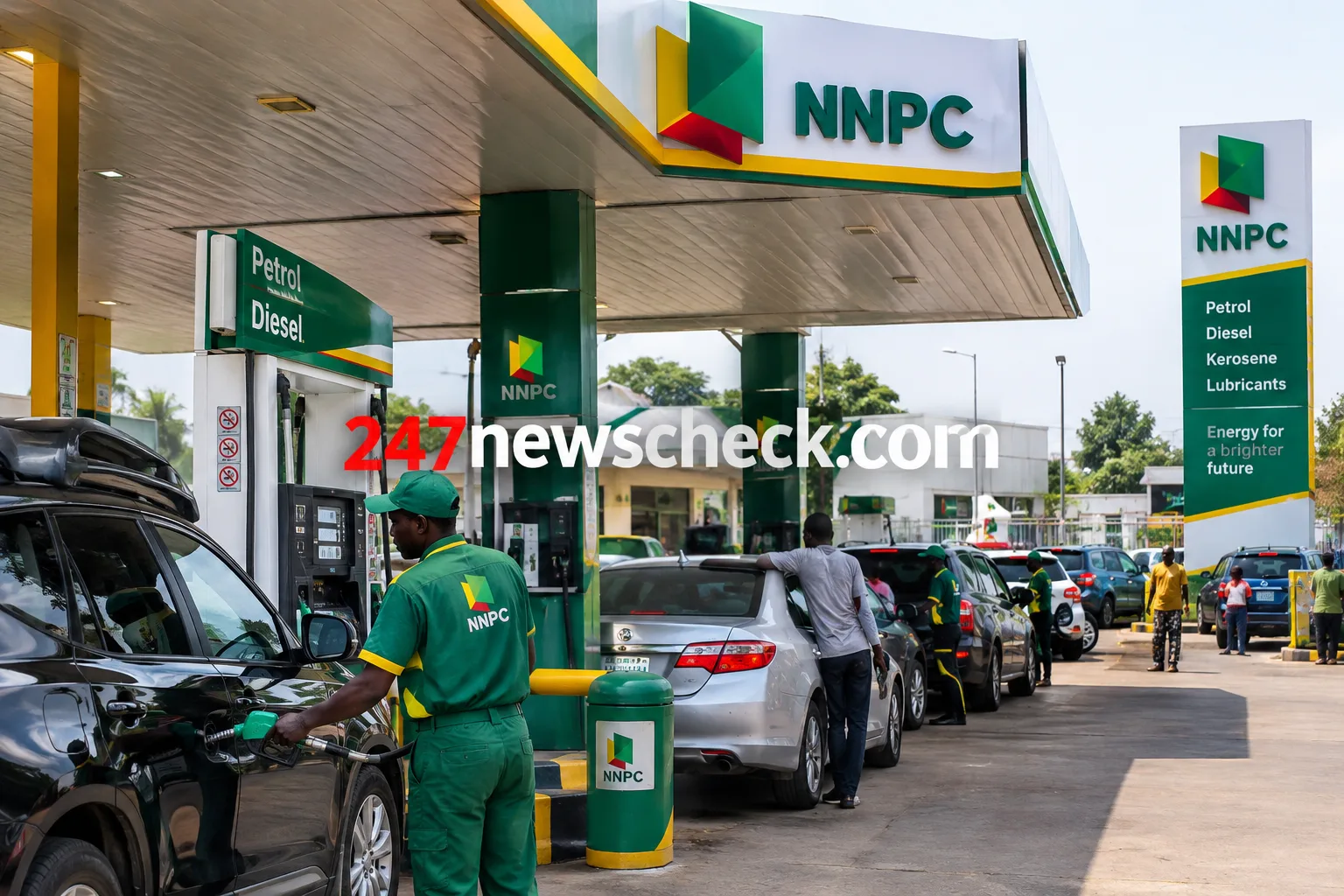
The Federal Government has proposed a ₦1,350-per-litre ceiling on the landing or ex-gantry cost of petrol as part of efforts to reduce sudden fuel-price increases and ease the pressure rising energy costs are placing on Nigerian households and businesses.
The Minister of Finance and Coordinating Minister of the Economy, Taiwo Oyedele, disclosed the proposal during a briefing in Abuja on Thursday, October 8, 2026. He said the government was negotiating the arrangement to make petrol prices more predictable when international crude oil prices and foreign-exchange conditions change.
The proposal comes at a time when higher fuel costs are affecting transportation, the movement of goods, small businesses and household budgets. For many Nigerians, the impact of an increase at the filling station does not end with the cost of buying petrol. It can also influence the fares paid by commuters and the prices charged for food, deliveries and other everyday services.
However, the proposed ceiling should not be mistaken for a fixed nationwide pump price of ₦1,350 per litre. It applies to petrol’s landing or ex-gantry cost, and the final amount motorists pay at filling stations may still depend on other costs and market conditions.
What Is the Federal Government Proposing?
Under the proposed price-modulation arrangement, the government is negotiating a ceiling of ₦1,350 per litre on petrol’s landing or ex-gantry cost.
The idea is to reduce the extent to which sudden increases in global oil prices or changes in the exchange rate immediately translate into higher domestic fuel costs.
According to Oyedele, when the cost of supplying petrol rises above the proposed ceiling, refiners and importers would initially carry the difference. They would then be allowed to recover the shortfall when market conditions become more favourable, including when crude oil prices or exchange-rate pressures ease.
The government has also indicated that the ceiling would be reviewed monthly, with relevant figures published to improve transparency.
If implemented as described, the arrangement would aim to spread the effect of market changes over time instead of allowing every sharp increase in international costs to pass immediately to consumers.
The proposal is still a negotiated arrangement, so its practical effect will depend on the final terms, how participating suppliers apply it and whether the expected price stability reaches motorists and businesses.
Why Is the ₦1,350 Ceiling Being Considered?
Petrol prices are influenced by several factors, including crude oil prices, the cost of refined products, shipping and distribution expenses, and the exchange rate.
When these costs rise sharply, fuel suppliers face higher expenses. Those increases can feed into pump prices, raising the cost of transport and business operations.
Nigeria produces crude oil, but that does not automatically insulate the domestic fuel market from international price movements. The cost and availability of crude, refining arrangements, logistics and currency movements can still affect the price of petrol supplied to consumers.
The current proposal is therefore intended to address the speed and severity of price changes rather than eliminate all the factors that influence fuel prices.
For households already managing expenses for food, rent, school needs and healthcare, even a short period of sharp fuel-price increases can force difficult spending decisions. For traders and small businesses, higher transport and generator costs can reduce profit margins or make it more expensive to serve customers.
The government’s challenge is to provide meaningful relief while avoiding a policy that creates larger fiscal pressures or discourages the supply of petrol.
Does the Proposal Mean Petrol Will Sell for ₦1,350 at Filling Stations?
No. This is one of the most important points Nigerians need to understand.
The proposed ₦1,350 ceiling applies to the landing or ex-gantry cost of petrol, not necessarily the retail price displayed at every filling station.
The amount motorists pay at the pump may also reflect distribution, transportation, operating and retail costs, among other factors. The proposal is intended to moderate the underlying cost of petrol and reduce sudden changes, rather than announce a universal retail price.
For example, a ceiling on the cost at which petrol enters the distribution chain does not, by itself, determine the final price charged to motorists. The final outcome will depend on the arrangement’s terms and how the market responds.
Consumers should therefore avoid assuming that the announcement means petrol prices will immediately fall to ₦1,350 per litre nationwide. The government’s stated objective is to reduce volatility, and the actual effect will need to be assessed through the prices charged by suppliers and filling stations.
Why the Government Says It Is Not Bringing Back Fuel Subsidy
The proposed measure has renewed discussion about whether the government is returning to the fuel-subsidy system that was removed in May 2023.
Oyedele has rejected that interpretation. The government says the proposed price-modulation arrangement is intended to smooth price movements over time, rather than permanently suppress petrol prices through a broad government subsidy.
Under the proposed framework, refiners and importers would initially absorb costs above the ceiling and recover the difference later when market conditions allow. This differs in its stated design from a blanket arrangement in which the government pays part of the cost to keep petrol selling below its market-linked price.
Nevertheless, the distinction will depend on how the policy is structured and implemented. Nigerians will reasonably want to know how suppliers will recover deferred costs, how the monthly review will work and what safeguards will prevent the arrangement from creating new financial burdens.
Clear rules and regular public reporting will be important if the government wants households, businesses and market participants to understand how the system operates.
Other Measures to Ease the Pressure of Rising Fuel Prices
The proposed ceiling is one part of a wider package of measures announced by the Federal Government to cushion the impact of rising fuel costs.
1. A 30-day petrol discount at NNPC stations
The government announced a 30-day discount arrangement involving the Nigerian National Petroleum Company Limited (NNPC), with priority intended for public transport operators. NNPC Retail has agreed to forgo its petrol retail profit margin during the period, according to the State House announcement.
The aim is to offer temporary relief, particularly to transport operators whose fuel expenses affect the fares charged to passengers. How much commuters ultimately benefit will depend on implementation and whether savings are passed on through lower or more stable fares.
2. More crude oil supply arrangements for local refineries
The government also plans to use forward sales of crude oil to domestic refineries as production improves. The stated aim is to help local refiners manage supply and reduce the immediate impact of international price swings.
The effectiveness of this measure will depend on the availability of crude, the terms of supply and the ability of refineries to produce and distribute petroleum products consistently.
3. Action against illegal levies and unnecessary costs
The government says it will work to address illegal road taxes and levies that add to transportation and logistics expenses.
Such costs can affect the movement of fuel and other goods. Reducing them could help businesses, although the benefit will depend on enforcement and whether lower operating costs are reflected in the prices consumers pay.
4. Support for vulnerable households and small businesses
The proposed package includes expanded support for vulnerable households and subsidised credit for small businesses and consumers.
The key question will be how eligible beneficiaries are identified, how support is delivered and whether assistance reaches those facing the greatest pressure from rising living costs.
5. Faster adoption of compressed natural gas
The government intends to accelerate the rollout of compressed natural gas (CNG) vehicles as another way to reduce dependence on petrol for some forms of transport.
A wider CNG network could provide an alternative for participating transport operators, but the transition requires accessible refuelling facilities, suitable vehicles and reliable operating arrangements.
6. A proposed excess-profit measure
The government has also said it will consider an excess-profit tax for energy operators found to be taking undue advantage of the situation. The proposed proceeds would be directed towards measures intended to cushion the impact of fuel prices.
The design, legal basis and implementation of any such measure will be important to watch.
7. A National Strategic Fuel Reserve
Another announced measure is investment in a National Strategic Fuel Reserve. The government says refined products could be released under published rules during global disruptions or when hoarding threatens supply and price stability.
If implemented effectively, a strategic reserve could help the country respond to supply shocks. Its value would depend on transparent release rules, adequate storage and credible oversight.
What Could the Proposal Mean for Ordinary Nigerians?
For motorists, the most immediate concern is whether the plan will reduce sudden increases at filling stations. A more predictable price could make it easier to plan weekly transport and household expenses, even if it does not immediately deliver a major reduction in the amount paid per litre.
For commuters, the benefit may depend on transport operators. When petrol prices rise, commercial drivers often face higher operating costs and may increase fares. The government has acknowledged this connection by prioritising public transporters under the temporary NNPC discount arrangement.
For traders and small businesses, more stable fuel costs could make deliveries, stock movement and daily operations easier to budget for. Businesses that rely on petrol-powered generators may also remain exposed to fuel expenses, even if transport-related costs become more predictable.
Farmers and food sellers could benefit if lower volatility in transport and distribution costs helps moderate the cost of moving produce from farms to markets. However, food prices also depend on factors such as harvest conditions, security, storage, road access and market supply. A petrol-price measure alone cannot guarantee cheaper food.
The broader test is whether the policy reduces uncertainty without creating new supply problems or leaving businesses to pass accumulated costs on to consumers later.
What Nigerians Should Watch Next
Several details will help determine whether the proposal delivers the relief the government expects.
First, the final terms of the ₦1,350 ceiling need to be made clear. Nigerians will want to know when it takes effect, which suppliers are covered and how the arrangement will operate when costs rise above the ceiling.
Second, the promised monthly reviews and publication of figures will be important. Regular information would allow the public to understand changes in the underlying costs and assess whether the policy is working as intended.
Third, consumers should watch actual pump prices rather than assume the proposed landing-cost ceiling is the same as the retail price. Prices may differ between locations and suppliers, so the effect should be judged by what motorists are charged.
Fourth, the 30-day NNPC discount will need to be assessed separately. Its practical value will depend on availability, the discount offered and whether commercial transport operators pass savings on to passengers.
Finally, the government will need to show how it will monitor suppliers, communicate changes and address complaints about pricing or supply. The credibility of the proposal will depend not only on the announcement but also on its implementation.
The Bottom Line
The Federal Government’s proposed ₦1,350-per-litre ceiling is an attempt to reduce sudden changes in petrol costs without formally restoring the former blanket fuel subsidy.
Its potential benefit lies in making fuel prices more predictable and reducing the pressure that abrupt increases place on transport, household budgets and business operations. But the proposal is not the same as a promise that petrol will sell for ₦1,350 at every filling station.
For Nigerians facing high living costs, the measure will ultimately be judged by results: whether it limits sharp price increases, supports reliable supply and helps reduce the wider cost pressures associated with fuel.
Until the final terms and implementation become clearer, the key issues to follow are the monthly reviews, the treatment of costs above the ceiling, the temporary NNPC discount and the prices consumers actually pay.
247NewsCheck will continue to follow developments on petrol pricing, government policy and the effect of fuel costs on Nigerian households and businesses.