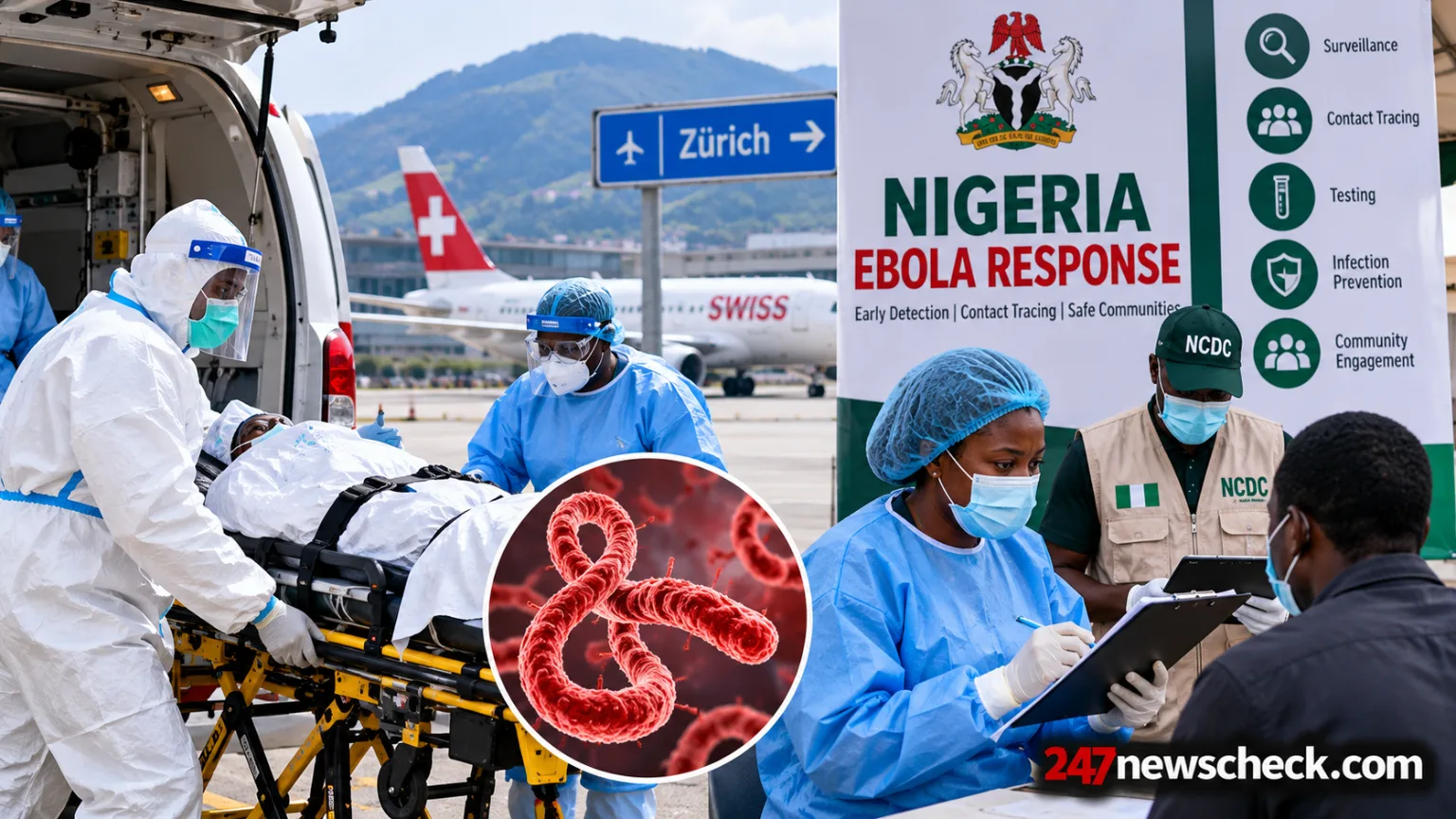
Nigeria is continuing contact tracing and other public-health measures following the medical evacuation of the country’s confirmed Ebola patient to Switzerland, as authorities work to identify possible exposures and prevent further transmission.
The Coordinating Minister of Health and Social Welfare, Professor Muhammad Ali Pate, confirmed that Swiss authorities had received the patient and her spouse following their departure from Abuja on Monday, October 26, 2026.
The patient is receiving treatment at Geneva University Hospitals, while her husband has been placed in isolation at University Hospital Zurich. The husband had not shown symptoms, according to official updates.
Pate said Nigeria’s response remained active despite the patient’s departure, with health teams continuing to monitor contacts, investigate alerts and implement containment measures in collaboration with international partners.
Nigeria continues monitoring exposed contacts
The Nigeria Centre for Disease Control and Prevention (NCDC) had identified 53 contacts linked to the confirmed case as of its October 24 situation report. They included healthcare workers, domestic staff and the patient’s spouse.
Following the evacuation, Nigeria is continuing to monitor 52 contacts, while Swiss authorities are responsible for following up the patient’s husband.
Contact tracing is a key part of controlling Ebola outbreaks. Health teams identify people who may have been exposed, assess their risk and monitor them for symptoms during the relevant observation period. Anyone who develops symptoms can then be assessed promptly and referred for appropriate care.
The NCDC has activated its national incident management system to coordinate the response, including case investigation, infection prevention and control, surveillance and public communication.
The Federal Government has also acknowledged the support of the World Health Organisation (WHO), the Africa Centres for Disease Control and Prevention (Africa CDC) and other public-health partners.
How Nigeria’s case was detected
Nigeria confirmed its first imported case of Ebola Bundibugyo virus disease on October 20, 2026, after laboratory testing detected the virus in a woman who had recently travelled from Uganda.
According to the WHO, the patient arrived in Nigeria on October 3 and developed symptoms on October 7. She sought medical attention in Abuja on October 11, and the infection was confirmed following laboratory investigation on October 20.
The circumstances surrounding her exposure remain under investigation. Authorities have been examining her travel and exposure history to establish how she contracted the virus and whether other people may have been exposed.
The Bundibugyo virus is one of the viruses that cause Ebola disease. The confirmation in Nigeria formed part of a wider regional outbreak that has prompted public-health responses in several African countries.
Patient’s evacuation does not end the response
Nigerian health authorities said the patient’s condition had improved considerably before the evacuation. Pate described her as stable, conscious and able to communicate, with laboratory results moving towards baseline levels.
However, he cautioned that clinical improvement did not automatically establish that the patient was no longer infectious. Strict medical and public-health protocols were therefore followed during the transfer.
The evacuation was coordinated with Swiss authorities and international partners. Switzerland has assumed responsibility for the patient’s continued medical care and for monitoring her husband.
The WHO has stated that Nigeria had no active confirmed Ebola case following the evacuation. That development does not mean the response can immediately stop: contacts still require follow-up, and investigators must continue assessing possible exposures.
A suspected Ebola case reported in Rivers State during the response was subsequently found negative by laboratory testing, according to the NCDC’s situation report. Health officials continue to investigate alerts as part of routine containment measures.
Public vigilance remains important
Health authorities have urged the public to rely on official updates and cooperate with public-health teams. Healthcare facilities must maintain infection-prevention measures, while surveillance teams need timely information about people who may have been exposed.
Ebola spreads through direct contact with the blood or other bodily fluids of an infected person who is symptomatic, or with contaminated materials. It is not spread simply by being in the same country as an infected person. Following public-health guidance and seeking prompt medical assessment when advised are important parts of outbreak control.
People who believe they may have been exposed should contact public-health officials or a healthcare provider for guidance rather than attempting to manage a suspected infection themselves.
The investigation into the source of Nigeria’s case is also important for identifying possible links to the wider outbreak and determining whether additional measures are necessary.
International cooperation and the next steps
The transfer of the patient to Switzerland highlights the role of cross-border cooperation in managing infectious disease emergencies. Nigerian clinicians provided care before the evacuation, while Swiss medical teams have taken over her treatment and the follow-up of her husband.
For Nigeria, the immediate priorities remain contact monitoring, rapid investigation of suspected cases, protection of healthcare workers and transparent communication with the public.
The number of contacts being monitored and the absence of active confirmed cases can change as investigations progress. Official situation reports from the NCDC and updates from the Federal Ministry of Health and Social Welfare remain the most reliable sources for developments.
247NewsCheck.com will continue to monitor Nigeria’s Ebola response, contact-tracing efforts and official public-health updates as further verified information becomes available.