
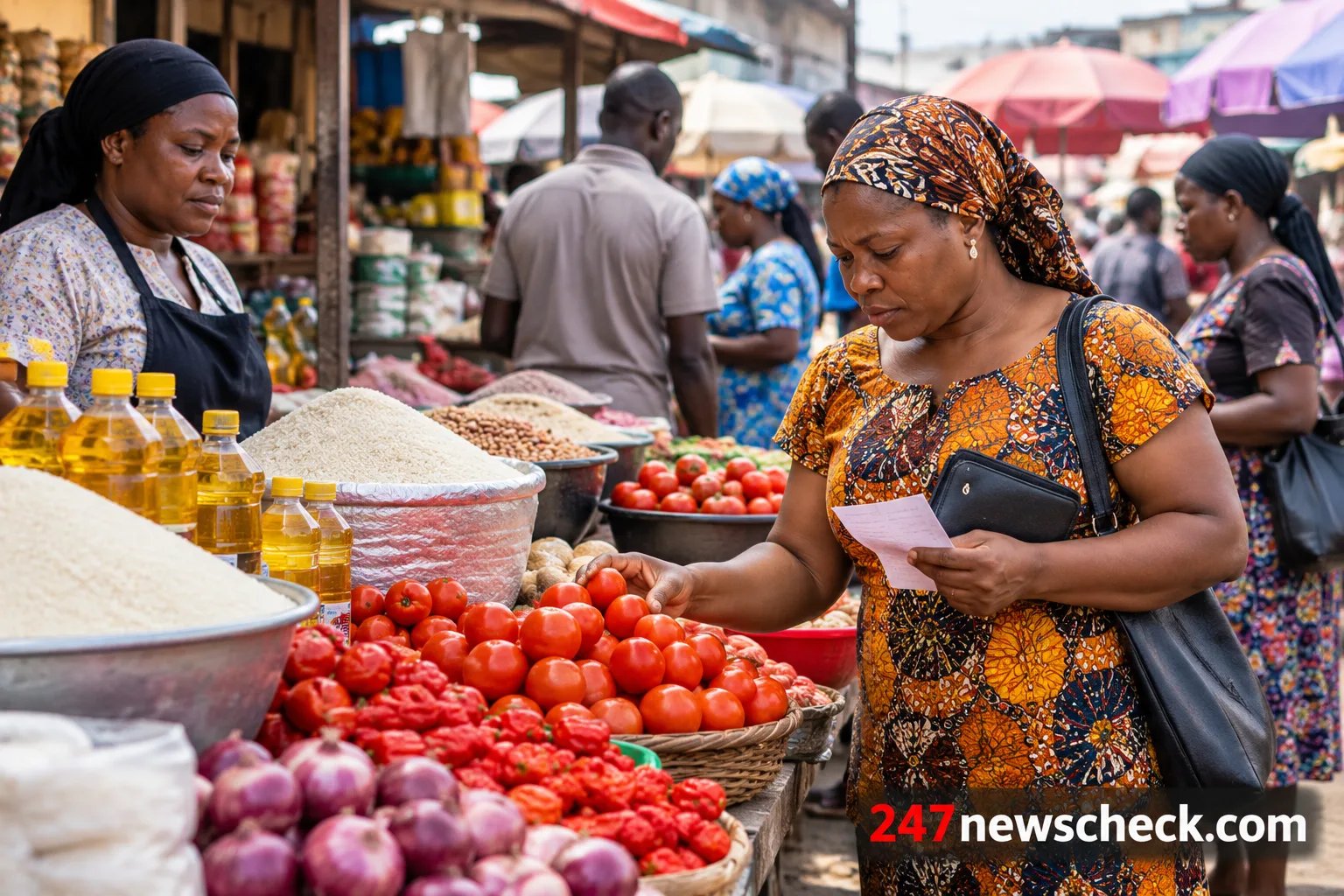
Falling Inflation, but the Cost-of-Living Challenge Remains
Nigeria’s latest inflation figures offer a sign of progress in the government’s effort to stabilise the economy. However, for millions of households, the real test of economic recovery remains the cost of food, transportation, electricity and other essential goods and services.
Inflation eased to 14.63 per cent in September 2026, down from 15.39 per cent in August, according to reporting on the National Bureau of Statistics’ latest Consumer Price Index release. The decline suggests that the pace of overall price increases has moderated.
But lower inflation does not automatically mean cheaper goods. When inflation falls, prices may continue to rise, only at a slower rate. For households whose earnings have struggled to keep pace with earlier price increases, everyday spending can therefore remain difficult.
The gap between improving economic indicators and household experiences is now a major issue in assessing the impact of Nigeria’s economic reforms.
How Economic Reforms Affect Ordinary Nigerians
Since 2023, the Federal Government has pursued major economic changes, including the removal of petrol subsidies and reforms to the foreign-exchange system. The government has argued that these measures are necessary to improve public finances, strengthen market confidence and encourage investment.
Finance Minister Taiwo Oyedele reiterated the administration’s position in October 2026, saying the government intends to rely more on private domestic and foreign investment to support future growth rather than expanding public borrowing.
Such policies can have long-term economic objectives, but their effects are not evenly distributed in the short term. Higher fuel costs can increase transport fares and the cost of moving food and other products. Businesses facing higher operating expenses may pass some of those costs on to consumers.
Households with fixed or irregular incomes are particularly exposed because they have limited room to absorb increases in essential spending.
Food and Transport Remain Central to Household Pressure
Food affordability is one of the clearest ways to measure whether economic improvements are reaching ordinary people. Even when overall inflation moderates, families may still struggle to afford the quantities and variety of food they previously purchased.
The cost of transporting farm produce from rural communities to urban markets also matters. Fuel prices, road conditions, insecurity in some farming areas, storage limitations and distribution costs can all influence what consumers pay.
Energy costs create another challenge. Higher petrol and diesel prices can affect generators, commercial transport, manufacturing and retail distribution. The Centre for the Promotion of Private Enterprise has warned that rising energy-price pressures could threaten the recent improvement in inflation.
For many small businesses, these expenses affect both profitability and the prices charged to customers. A lasting reduction in household pressure will therefore require more than a fall in the headline inflation rate.
What the Government Says It Is Trying to Achieve
The government maintains that its reform programme is intended to build a more stable and productive economy. Its stated priorities include attracting investment, strengthening public financial management, expanding access to finance and supporting domestic production.
The administration has also pointed to improvements in macroeconomic indicators, including lower inflation compared with earlier periods and economic growth recorded in 2026.
These indicators matter, but they do not by themselves establish how much individual households have gained. Economic growth can coexist with hardship when new opportunities and additional income are unevenly distributed or when essential expenses remain high.
The effectiveness of the reforms will ultimately depend on whether increased investment and stronger public finances produce better employment opportunities, more reliable services, improved productivity and greater purchasing power.
What Would Make the Difference for Households?
A sustainable improvement in living standards will require policies that address the everyday costs faced by families and businesses.
First, measures to improve food production and distribution should receive sustained attention. Better agricultural productivity, safer farming communities, adequate storage and more efficient transport links can help reduce avoidable costs between producers and consumers.
Second, energy supply and pricing remain important. Reliable electricity and a more efficient energy market could reduce the operating expenses that businesses pass on to customers.
Third, employment and income growth must accompany macroeconomic stabilisation. Workers and small-business owners need opportunities to earn more, improve productivity and plan for the future.
Finally, public support programmes should be transparent, adequately targeted and independently assessed. Where assistance is provided to vulnerable households, the government should communicate who qualifies, how payments are delivered and how results are measured.
These measures would help establish whether economic reforms are improving daily life rather than merely producing better headline figures.
The Measure of Recovery
Nigeria’s easing inflation rate is a positive development, but it is not the end of the cost-of-living challenge. Prices that rose sharply in previous years can remain beyond the reach of many families even when the rate of increase slows.
The government faces the task of sustaining economic stability while ensuring that the benefits of reform reach households through better incomes, affordable essentials, reliable energy and productive employment.
For Nigerians, the most meaningful sign of recovery will be the ability to meet basic needs without an increasingly large share of household income being consumed by food, transport and utility bills.
The next phase of economic policy must therefore focus not only on improving national indicators but also on making those improvements visible in the daily lives of ordinary citizens.
From 247NewsCheck Editorial Desk