
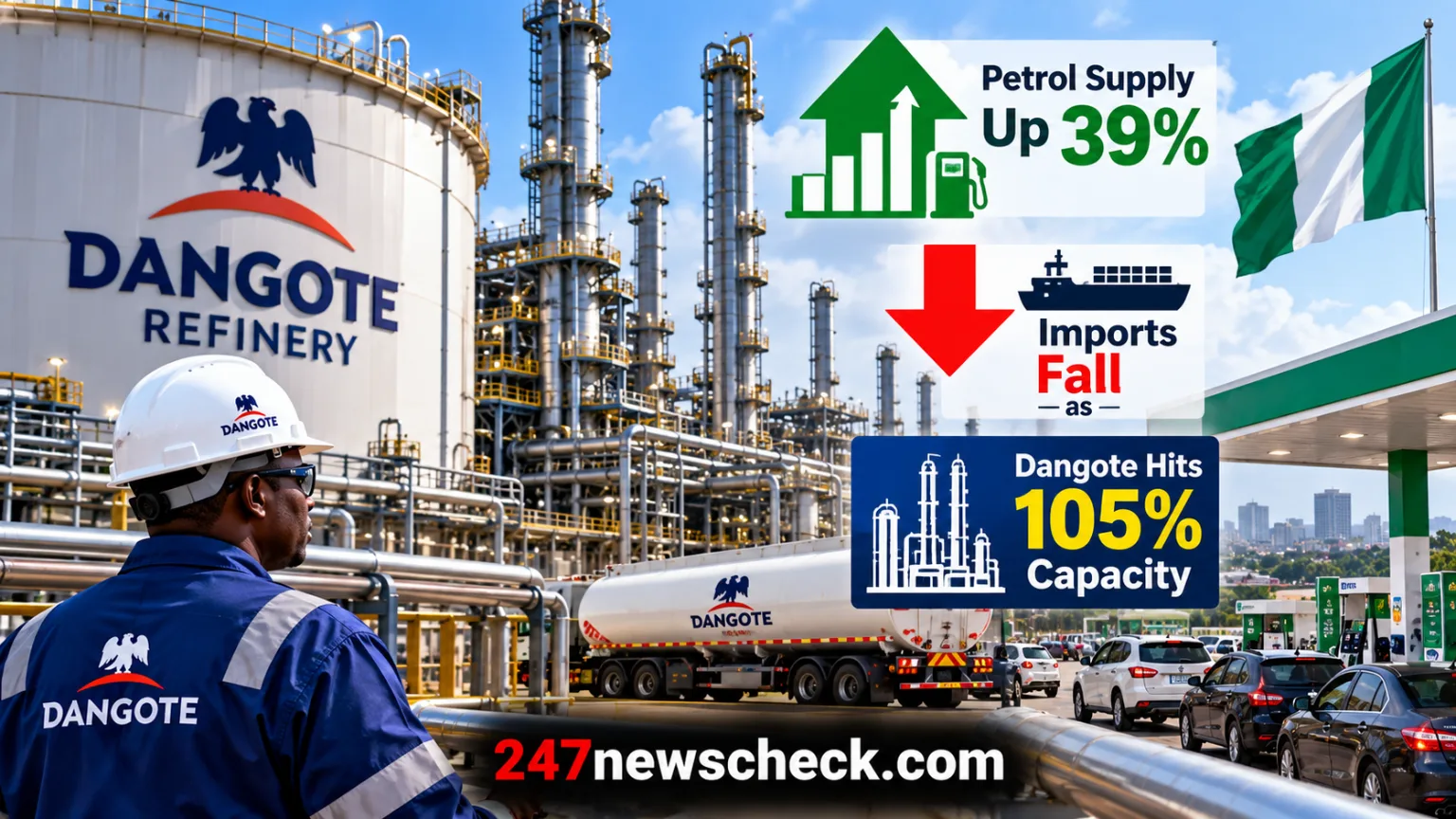
Nigeria recorded a significant increase in domestic petrol supply in August 2026, as deliveries from local refineries rose by 39 per cent and petrol imports declined, according to figures published by the Nigerian Midstream and Downstream Petroleum Regulatory Authority (NMDPRA).
The authority’s August 2026 sector factsheet showed that average daily domestic petrol receipts increased from 25.8 million litres in July to 35.9 million litres in August. Over the same period, daily petrol imports fell by 26 per cent, from 19.7 million litres to 14.6 million litres.
The figures point to a growing contribution from domestic refining, led by the Dangote Petroleum Refinery, although Nigeria’s fuel supply position continued to face challenges, particularly in maintaining adequate national reserves.
Dangote Refinery Drives Growth in Domestic Supply
The Dangote Petroleum Refinery recorded an average capacity utilisation rate of 105.21 per cent in August, exceeding its stated nameplate capacity during the reporting period.
According to the NMDPRA figures, the facility processed an average of 736,470 barrels of crude oil daily, compared with approximately 497,000 barrels per day in July.
The refinery produced an average of 41.94 million litres of petrol daily during August. Of this volume, approximately 35.87 million litres per day were recorded as domestic receipts, while an average of 9.73 million litres per day was exported.
The refinery’s performance helped increase the contribution of locally refined petrol to Nigeria’s overall supply. Domestic receipts accounted for approximately 71 per cent of the country’s total petrol receipts in August, compared with a greater reliance on imported supplies in earlier periods.
Capacity utilisation above 100 per cent does not necessarily mean a refinery has permanently expanded its officially rated capacity. It indicates that measured throughput exceeded the stated nameplate benchmark during the period, which can occur through operational optimisation and improved processing performance.
Petrol Imports Decline as Total Receipts Increase
Despite the reduction in imports, Nigeria’s total daily petrol receipts increased by 11 per cent, from 45.5 million litres in July to 50.5 million litres in August.
The figures suggest that the increase in locally supplied petrol more than offset the decline in imported volumes during the month.
Average daily petrol imports fell from 19.7 million litres in July to 14.6 million litres in August, while domestic receipts increased by 10.1 million litres per day.
This shift could reduce the market’s exposure to some of the costs and logistical risks associated with importing refined petroleum products. However, the data alone do not establish that retail petrol prices will fall, as pump prices are also influenced by crude oil prices, exchange rates, distribution costs, financing and competition among suppliers.
The figures also do not mean Nigeria has become fully independent of imported petrol. Imported volumes remained a substantial part of the country’s supply in August.
National Petrol Stocks Remain Below the Benchmark
The improvement in domestic supply did not eliminate concerns about the country’s petrol reserves.
The NMDPRA reported petrol stock sufficiency of 22.9 days at the end of August, below the 30-day benchmark used by the regulator. This left a shortfall of 7.1 days against the benchmark.
The inventory position highlights an important distinction between increasing daily supplies and maintaining sufficient reserves to withstand unexpected disruptions.
Adequate stock levels can help cushion the market against delays in shipments, refinery maintenance, distribution interruptions and sudden changes in demand. When reserves fall below the prescribed benchmark, the market may have less flexibility to absorb supply shocks.
The Dangote Refinery reported 360.4 million litres of petrol in closing stock at the end of August, alongside inventories of diesel and aviation fuel. These refinery-level inventories form part of the wider supply picture but should not be confused with the national stock-sufficiency measure.
State-Owned Refineries Remain a Concern
The NMDPRA factsheet listed the Nigerian National Petroleum Company Limited’s refineries in Port Harcourt, Warri and Kaduna as not producing during August.
Their continued absence from active production means that the country’s domestic refining contribution depends heavily on operating private-sector facilities, particularly the Dangote refinery.
A more diversified refining base could provide additional supply options and improve resilience when one facility experiences maintenance, operational difficulties or disruptions in crude supply.
The August data therefore present a mixed picture: domestic refining made substantial gains, but the full potential of Nigeria’s refining infrastructure remained unrealised.
What the Figures Mean for Consumers
Higher domestic petrol receipts may improve supply availability and reduce the need for imports, but the impact on motorists, transport operators and businesses will depend on how effectively products reach the retail market and how prices respond to wider economic conditions.
The August figures also showed that actual petrol consumption, measured by volumes trucked out into the domestic market, averaged 41.5 million litres per day. This was below the NMDPRA’s daily demand benchmark of 50 million litres.
The difference between a demand benchmark and actual volumes supplied to the market should not automatically be interpreted as evidence of a supply shortage of the same size. Consumption estimates, distribution patterns, prices and market behaviour all influence the relationship between benchmark demand and observed deliveries.
For households and businesses, the key indicators to watch include consistent product availability, stable distribution, national stock levels and changes in retail prices.
A Shift in Nigeria’s Petroleum Supply Structure
The August performance illustrates how increased domestic refining is reshaping Nigeria’s downstream petroleum market. Higher local receipts and lower imports suggest that the Dangote refinery is playing a larger role in meeting national demand.
However, sustained progress will depend on reliable refinery operations, access to crude feedstock, efficient distribution networks and adequate national reserves. The performance of the state-owned refineries will also remain relevant to the country’s longer-term energy security.
The latest figures are encouraging for domestic refining, but they do not, on their own, establish that fuel prices will decline or that supply challenges have been permanently resolved. Those outcomes will depend on developments across the wider petroleum market.
247NewsCheck.com will continue to monitor Nigeria’s petrol supply, domestic refining performance, import trends and fuel-price developments as further verified information becomes available.