
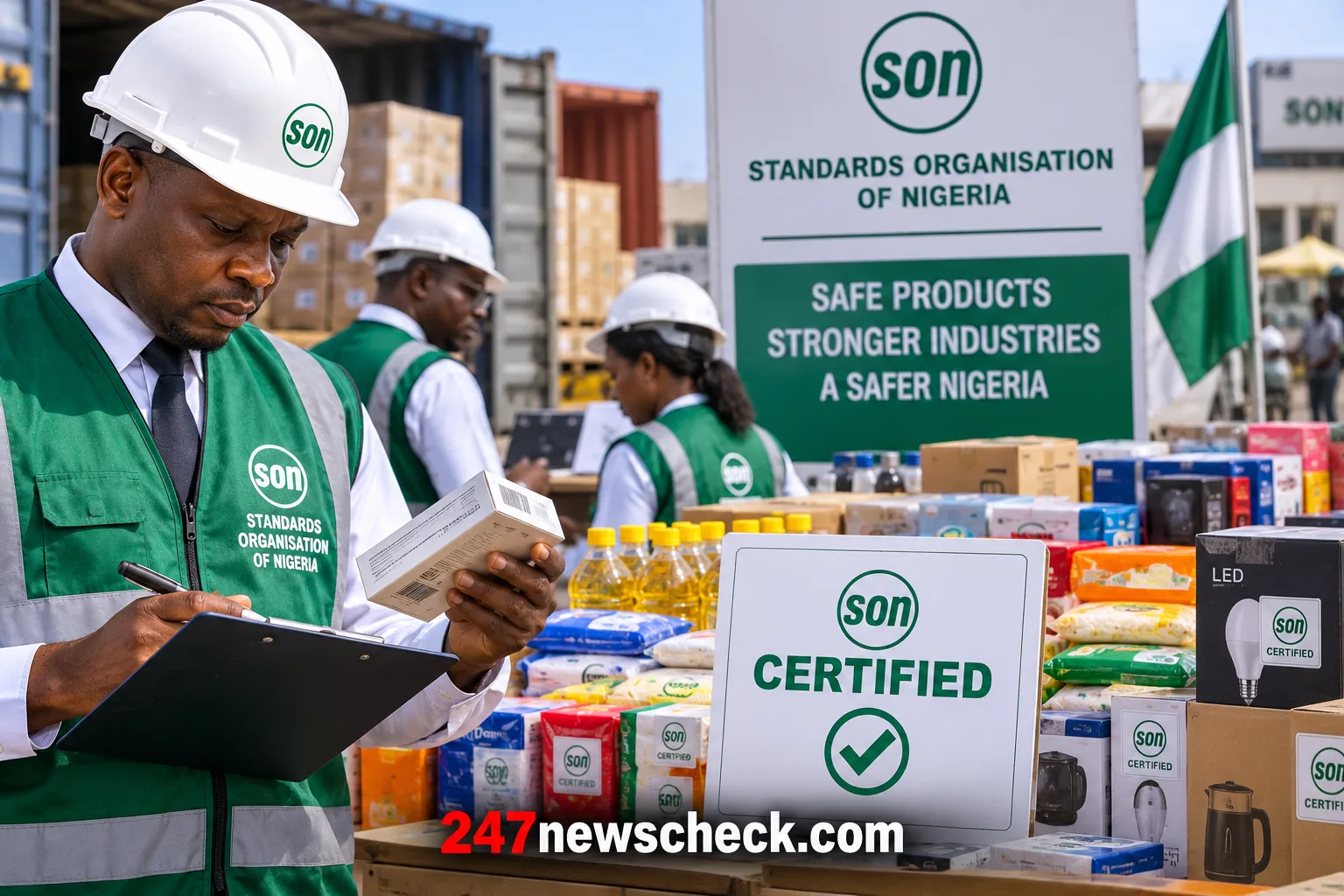
The Standards Organisation of Nigeria (SON) has reported a significant expansion of its product certification programme, with 17,866 locally manufactured products from 8,634 companies certified or revalidated under its Mandatory Conformity Assessment Programme (MANCAP).
The figures were disclosed by SON Director-General, Dr Ifeanyi Okeke, during the 2026 National MANCAP Quality Award ceremony and the programme’s 20th-anniversary celebration in Lagos.
The milestone comes as Nigeria continues to confront concerns about counterfeit, unsafe and substandard goods, which can expose consumers to safety risks, undermine legitimate businesses and weaken confidence in locally manufactured products.
According to information reported about the anniversary event, MANCAP covered 1,930 products from 458 companies in its first year. The latest figures indicate a substantial expansion in the number of products and businesses covered since the scheme began in 2006.
However, the increase in certification figures should not be interpreted as evidence that substandard products have been eliminated from the Nigerian market. Continued monitoring, enforcement and compliance remain necessary to ensure that goods sold to consumers meet applicable standards.
How the MANCAP programme works
MANCAP is SON’s mandatory conformity assessment programme for products manufactured locally in Nigeria. Its purpose is to ensure that eligible products meet the relevant Nigerian Industrial Standards before they are introduced into the market or exported.
The certification process includes factory inspections, product sampling, laboratory testing and compliance reviews. These procedures are intended to establish whether products satisfy the applicable requirements.
SON’s published guidance states that certification is subject to continued compliance. Certificates are renewable every three years, with annual surveillance inspections and testing used to monitor conformity.
The programme covers different areas of manufacturing, including electrical and electronic products, chemicals, mechanical goods, building-related products, textiles and leather products, and food products.
By setting and enforcing minimum quality requirements, the programme is designed to help consumers make more informed purchasing decisions while encouraging manufacturers to maintain consistent production standards.
Quality assurance and consumer protection
The presence of substandard goods in the market remains a challenge for regulators, consumers and responsible manufacturers. Products that fail to meet relevant requirements can create safety concerns, perform poorly or offer consumers less value than expected.
For manufacturers that invest in quality control, the circulation of inferior goods can also create unfair competition. Businesses that cut corners may gain an advantage over companies that spend money on compliant materials, production processes, testing and product improvement.
Effective certification and enforcement can help address these problems, but their impact depends on how consistently standards are applied and how effectively violations are identified and addressed.
SON’s compliance-monitoring responsibilities include market surveillance, responding to complaints, investigating suspected non-compliance and taking enforcement action where warranted. The organisation also monitors imported products through separate conformity assessment and certification arrangements.
These activities are important because certification at the point of production must be supported by ongoing checks to identify products that may be falsely labelled, improperly represented or no longer compliant.
Government calls for a stronger quality culture
At the anniversary event, the Permanent Secretary of the Federal Ministry of Industry, Trade and Investment, Dr Chris Osa Isokpunwu, represented the minister, Dr Jumoke Oduwole, and emphasised the importance of maintaining quality standards across the manufacturing sector.
The event’s theme, “Building Trust in Quality and Safety Ecosystem,” highlighted the relationship between product quality, consumer confidence and industrial competitiveness.
The ministry’s message, as reported at the event, was that manufacturers should integrate quality assurance throughout production rather than treat certification as a final regulatory formality.
That approach involves attention to product design, raw materials, manufacturing processes, packaging and distribution. Consistent quality management can help businesses reduce waste, protect their reputations and improve their ability to compete for customers.
Manufacturers recognised at the ceremony for maintaining their certifications over 10, 15 and 20 years were also acknowledged for their sustained commitment to compliance.
What the figures mean for Nigerian manufacturers
The expansion of MANCAP offers an indication of the programme’s reach across Nigeria’s manufacturing sector. Nevertheless, the number of certified products alone does not establish the overall level of compliance in the wider market or measure how much unsafe and substandard merchandise remains in circulation.
For the programme to deliver lasting benefits, manufacturers must continue to meet the standards attached to their products, while regulators must maintain credible testing, surveillance and enforcement.
Consumers also have a role to play. Buyers should check product labels, packaging, certification marks and other relevant information, particularly when purchasing goods where poor quality could present safety risks. Suspected counterfeit or unsafe products should be reported to the appropriate regulatory authorities.
SON provides guidance on identifying its certification marks and on its conformity assessment programmes through its official website.
The challenge ahead
As MANCAP enters its third decade, the central test will be whether the expansion of certification translates into consistently safer products, stronger consumer confidence and improved competitiveness for Nigerian manufacturers.
The latest figures show that the programme now covers substantially more products and companies than it did when it began. Sustaining that progress will require continued investment in testing capacity, transparent certification procedures, market surveillance and effective action against deliberate non-compliance.
For consumers, the objective is straightforward: products should meet the standards required for their intended use. For businesses, compliance should support fair competition and a reputation for reliability. For regulators, the task is to ensure that certification remains meaningful beyond the award of a certificate.
247NewsCheck.com will continue to follow developments in product regulation, consumer protection and Nigeria’s manufacturing sector as further verified information becomes available.