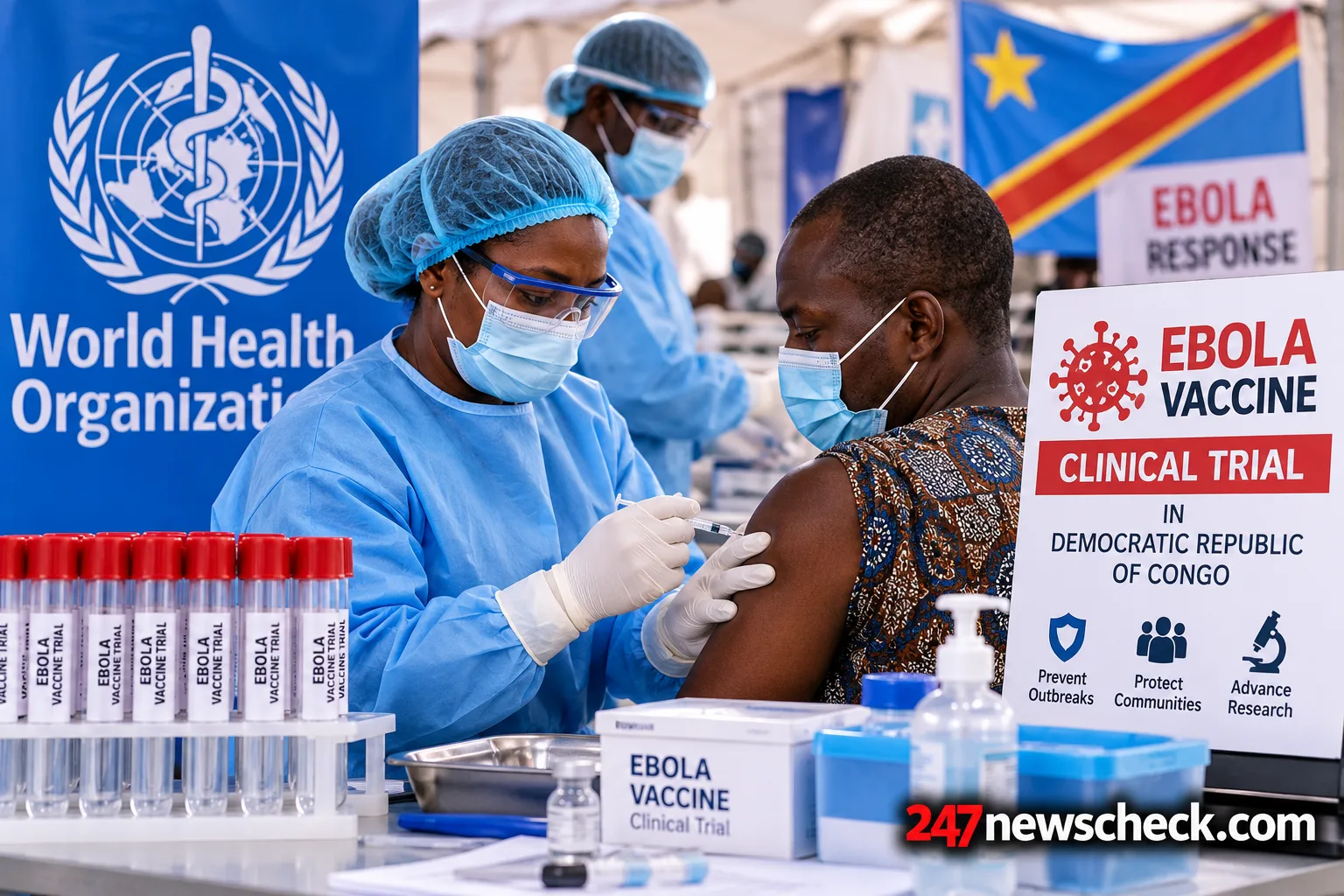
BUNIA, Democratic Republic of the Congo — The World Health Organization (WHO) has announced the commencement of a clinical trial to assess potential vaccines against the Bundibugyo strain of Ebola, marking a significant step in efforts to strengthen the response to the outbreak in the Democratic Republic of the Congo (DR Congo).
The trial, known as Tumaini, meaning “hope” in Swahili, began on Friday, 23 October 2026, in Bunia, the capital of Ituri Province. The first participants received the Ervebo vaccine as researchers began investigating whether it could provide protection against the virus responsible for the current epidemic.
WHO Director-General Tedros Adhanom Ghebreyesus announced the development, describing the study as a DRC-led effort supported by the international health agency to generate evidence that could help protect people at risk.
Scientists Investigate Protection Against Bundibugyo Virus
The current outbreak is caused by the Bundibugyo virus, a species of Ebola for which no vaccine has been licensed specifically for prevention. Ervebo, the vaccine being evaluated first in the trial, is licensed for protection against Ebola disease caused by the Zaire strain.
Researchers will therefore investigate whether Ervebo can offer meaningful protection against Bundibugyo. Its established use against another Ebola strain does not mean it is already proven effective against the virus responsible for this outbreak.
The distinction is critical because different Ebola virus species can respond differently to vaccines. The trial is intended to provide scientific evidence to guide public health decisions rather than assume that an existing vaccine will work against a different strain.
Tumaini Trial to Assess Multiple Vaccine Candidates
The Tumaini study uses a clinical trial framework designed to evaluate the safety, immune response and protective effectiveness of multiple vaccine candidates.
In addition to Ervebo, the programme is expected to incorporate two experimental vaccines specifically being developed against Bundibugyo virus. One candidate uses an adenoviral-vector platform developed by researchers at the University of Oxford, while the other is an mRNA vaccine being developed by Moderna.
The candidates are progressing through earlier stages of clinical development and are expected to enter the trial when the necessary preparations are completed.
The study will use a ring vaccination approach, focusing on contacts of confirmed cases and other people considered at high risk of infection. This strategy is intended to help researchers assess vaccine performance among people who face an elevated risk of exposure during the outbreak.
The trial is also expected to include pregnant women and children aged 12 years and older, helping to generate evidence for groups that have often been underrepresented in clinical research.
DR Congo Faces a Major Public Health Challenge
The trial begins as DR Congo confronts a severe Ebola outbreak that has placed substantial pressure on health authorities and response teams. Reports available on 24 October indicated that the outbreak had surpassed 9,700 reported cases, with deaths exceeding 4,600. These figures reflect reported totals at the time and may change as surveillance and verification continue.
The WHO has classified the outbreak as a public health emergency of international concern. Responding to the crisis requires coordinated case detection, contact tracing, appropriate clinical care, infection prevention, community engagement and cross-border cooperation.
The absence of a licensed vaccine specifically targeting Bundibugyo virus has made the search for effective preventive tools particularly urgent. However, vaccine research must establish both safety and effectiveness before any candidate can be considered proven protection against the strain.
Why the Trial Matters
The commencement of Tumaini offers researchers an opportunity to gather evidence during an active outbreak, when the need for effective prevention is immediate. If a candidate demonstrates sufficient safety and protective benefit, the findings could help shape future outbreak-control strategies and preparedness for subsequent Bundibugyo outbreaks.
Nevertheless, the start of the trial should not be interpreted as confirmation that any of the vaccines being studied can prevent Bundibugyo infection. That conclusion will depend on the trial’s findings and subsequent scientific and regulatory assessment.
For affected communities, the study represents an important research effort, but established public health measures remain essential while evidence is being collected. People should continue to follow instructions from qualified health authorities and seek medical advice promptly if they develop symptoms or believe they have been exposed.
The coming stages of the trial will be closely watched by health professionals and public health authorities seeking better ways to control the outbreak and reduce the risk of future emergencies.
247NewsCheck.com will continue to monitor developments in the DR Congo Ebola outbreak and report verified updates on the Tumaini trial, including new findings on vaccine safety and effectiveness as they become available.